Linking late to Linda’s “water” prompt at dVerse poetics…
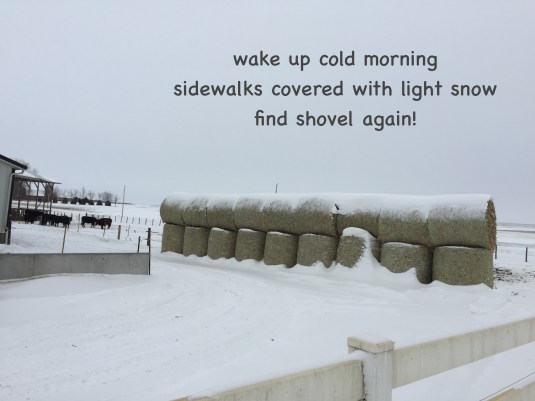
water, water, water, everywhere!
dark clouds broiling across plains’
hard-crusted snowy landscape; soil
soaked by heavy rains, washes into
half-frozen rivers, ice breaks loose
floating icebergs grind along banks
dragging down bridges, trees, poles;
pressured dam gives way into torrent
that floods downstream in spreading
wave that engulfs barns, farmhouses’
families escape on muddy roads while
cattle are trapped on shrinking islands
hay bales swept away, fields ruined and
Nebraska is once again a broad ocean…
Chèvrefeuille at Carpe Diem Haiku Kai invites us to find a haiku from our archives and re-write it. I decided to post a haiku I submitted to a poetry contest last year…and make it a tanka. Death is part of life in our natural world.
across this frozen prairie, winter blows
strong blizzard gale bullwhips up fallen snow
we shiver, polar-cold, wind’s frightful roar
and add thick logs to embers burning low
such fierceness could freeze creature to the core
if wait exposed; come, safe inside closed door
we offer mugs to drink in warming flow
and reminisce of summer sun-swept shores
Rubaiyat: The ruba’i is a classical Persian quatrain or double couplet of 4 lines and having rhyme scheme either AABA or AAAA. A collection of more than one quatrain is called a rubaiyat.
Edward Fitzgerald popularized the form in English.He chose iambic pentameter, generally 10-syllable lines with alternating accents, for the meter and used the AABA rhyme scheme. Having the unrhymed third line allows the poet to use that sound from the first quatrain as the main rhyming sound in the next quatrain, connecting the stanzas.
My thanks to Frank at dVerse Poets for this information on the rubaiyat form!
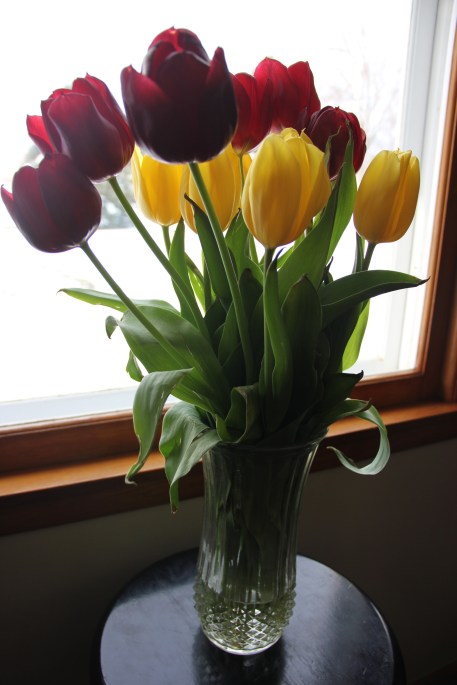
Two years ago we invited our five grandchildren and their parents for Easter dinner after Resurrection Sunday worship. We already enjoyed warmer spring temperatures and tulip bulbs sprouted in the garden. A delicious meal was planned featuring honeyed ham with favorite side dishes. The mothers laid out their children’s best clothes with frills and bowties in anticipation of the next day’s celebration.
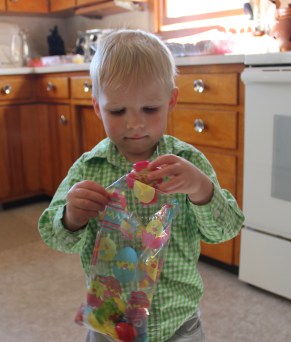
During the night, it snowed a wet blanket on the greening lawn and dirt farmyard. Plans for our first annual Easter egg hunt had to modified over the protests of the children, who were soothed by the fruity taste of jellybeans. The rabbit tracks across the waiting garden disappeared with the melting snow. New life persists and now nine grandkids are budding on the branches of our family tree.
photo by lynn
wet snow on easter
spring’s resurrection muddied
hide the eggs indoors
Laterthe same year, our weathered, fifty-year-old kitchen cupboards were re-done (resurrected) in “espresso” with distressed brass hardware 🙂
Here I use a haiku by Chevrefeuille to create a “troiku” which is a unique form invented by our host at Carpe Diem Haiku Kai. Like a Russian troika, the original haiku is the “sleigh” pulled by the 3 “horses”/haiku verses.

 a poem in my pocket
You must be logged in to post a comment.